


Benefits of KYC Software in AML Compliance
Benefits of KYC Software in AML Compliance
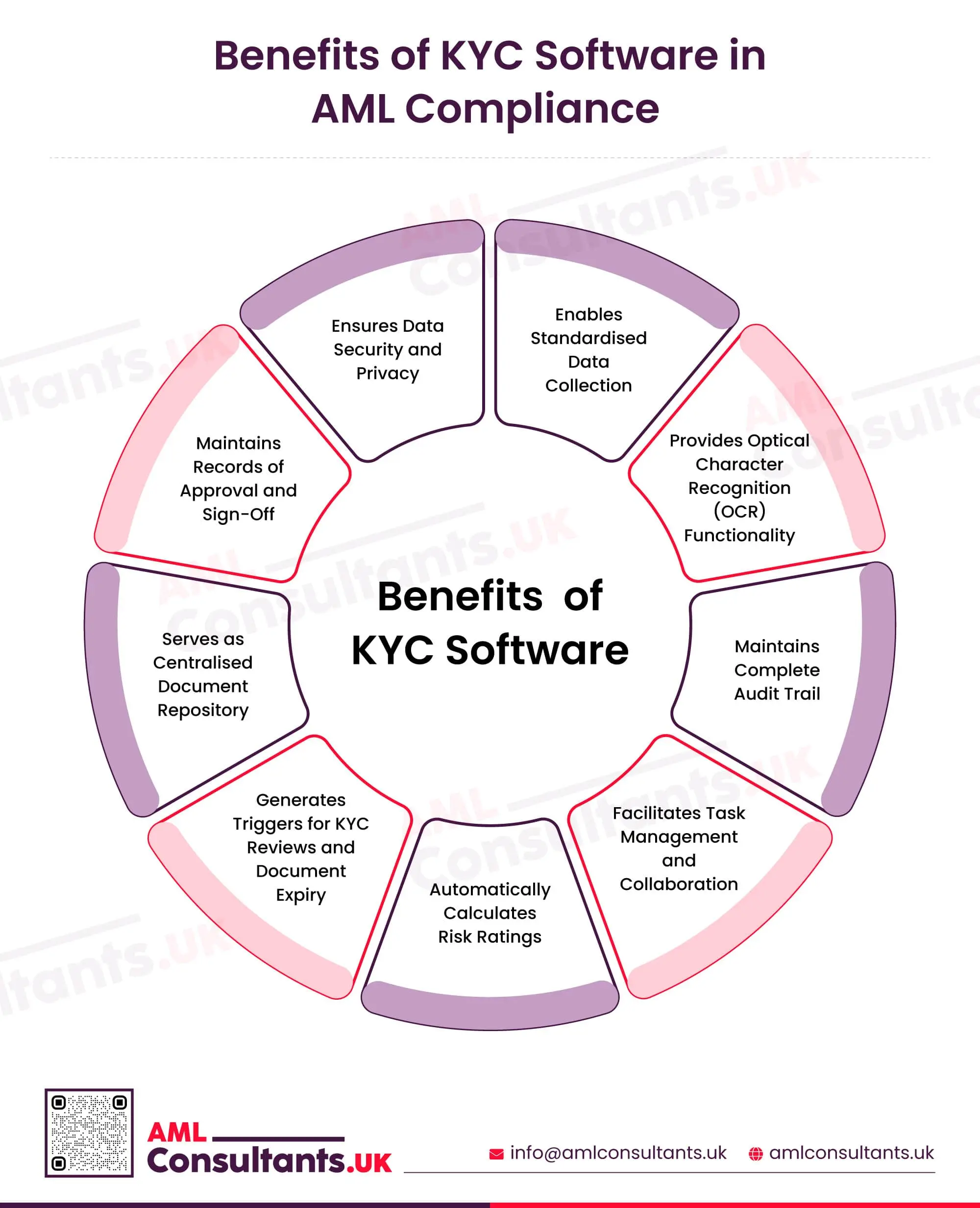
Customer identification and verification, or Know Your Customer (KYC), is an important aspect of the Customer Due Diligence (CDD) process. KYC helps Relevant Persons regulated under the Money Laundering, Terrorist Financing, and Transfer of Funds (Information on the Payer) Regulations 2017 (MLR 2017), verify the identities of their customers, ensuring they are who they claim to be. This prevents engagement with individuals attempting to hide their identities to commit financial crimes. KYC software solutions streamline and automate this process, enhancing efficiency and accuracy. In this infographic, we’ll discuss the key benefits of leveraging KYC software.
The benefits of KYC software include the following:
Enables Standardised Data Collection
KYC software ensures that all customer information is collected in a uniform and standardised format, which enhances the consistency and reliability of the data. By setting predefined data fields, the software reduces the chance of inconsistencies or human errors that can often occur with manual processes. Standardised data collection allows for easier comparison, analysis, and processing of customer information, leading to more accurate decision-making. It also ensures that the data aligns with AML compliance requirements, as updated from time to time.
Provides Optical Character Recognition (OCR) Functionality
OCR functionality helps convert photos of documents into editable text. KYC software is integrated with the functionality to ensure that all documents uploaded into the system are readable and convertible to text. This text can then be leveraged by the KYC software to auto-fill data in KYC questionnaires.
Maintains Complete Audit Trail
Record-keeping is an important component of AML compliance obligations of Relevant Persons in UK. KYC software helps maintain a complete audit trail for all KYC-related tasks, including customer details, KYC documents collected, approvals, employees doing the KYC, any escalations to the Senior Management, etc.
Facilitates Task Management and Collaboration
KYC software improves task management by enabling teams to collaborate more efficiently. In businesses that have multiple employees involved in the KYC process, KYC software serves as a centralised platform where tasks can be assigned, tracked, and completed. For example, different departments may be responsible for collecting customer data, conducting name screening, etc. KYC software ensures that the entire team can collaborate and that AML Compliance Officer and Senior Management have visibility into the KYC process.
Automatically Calculates Risk Ratings
KYC software incorporates automatic Customer Risk Assessment (CRA) features, which help Relevant Persons calculate the risk levels associated with each customer by utilising KYC data and data from other AML compliance-related tasks such as name screening. These ratings are used to categorise customers based on their risk, helping the Relevant Persons adopt the appropriate type of CDD for the customer and seek Senior Management approvals whenever required.
Generates Triggers for KYC Reviews and Document Expiry
A significant benefit of KYC software is its ability to track the expiration of customer’s KYC documents and generate timely reminders for KYC reviews. MLR 2017 requires Relevant Persons to conduct ongoing monitoring of their business relationships with the customers to detect any changes in customer information.
This triggers the need to reconduct KYC. KYC software automates this process by setting up triggers and alerts to notify employees when it’s time to conduct a KYC refresh. Further, KYC software also generates alerts whenever it detects that a customer’s KYC documents are expiring. This ensures that customer data remains accurate and up-to-date, mitigating the risk of doing business with customers whose information has expired or become outdated.
Serves as Centralised Document Repository
KYC software acts as a centralised repository for all customer-related KYC documents. The software allows businesses to securely store and access customer documents in one place, reducing the need for paper records or scattered digital files across multiple systems. KYC software also ensures that the KYC documents are easily retrievable and reviewable.
Maintains Records of Approval and Sign-Off
KYC software maintains a comprehensive record of all approvals and sign-offs within the KYC verification process. When a KYC is completed, the system records which individuals approved or rejected the information, as well as any comments or notes attached to the decision. These records provide a transparent, auditable history of the verification process and ensure that only authorised personnel are able to approve or finalise KYC checks.
Ensures Data Security and Privacy
KYC software incorporates strong security features that protect sensitive customer data from unauthorised access or breaches. These security measures can include encryption, multi-factor authentication, secure cloud storage, etc. It helps Relevant Persons comply with their obligations under the Data Protection Act 2018.
Benefits of KYC software: Final Thoughts
In conclusion, KYC software provides a variety of benefits that help Relevant Persons streamline and enhance their KYC processes. Leveraging KYC software can vastly improve the customer onboarding process as well by reducing the time required to conduct KYC. This improves engagement with the customers while ensuring compliance with AML obligations.